回应模式 - No.51650321
No.51650321 - 创作茶水间
无标题无名氏No.51650321 只看PO
2022-08-30(二)23:41:54
ID:aaTsm2i 回应
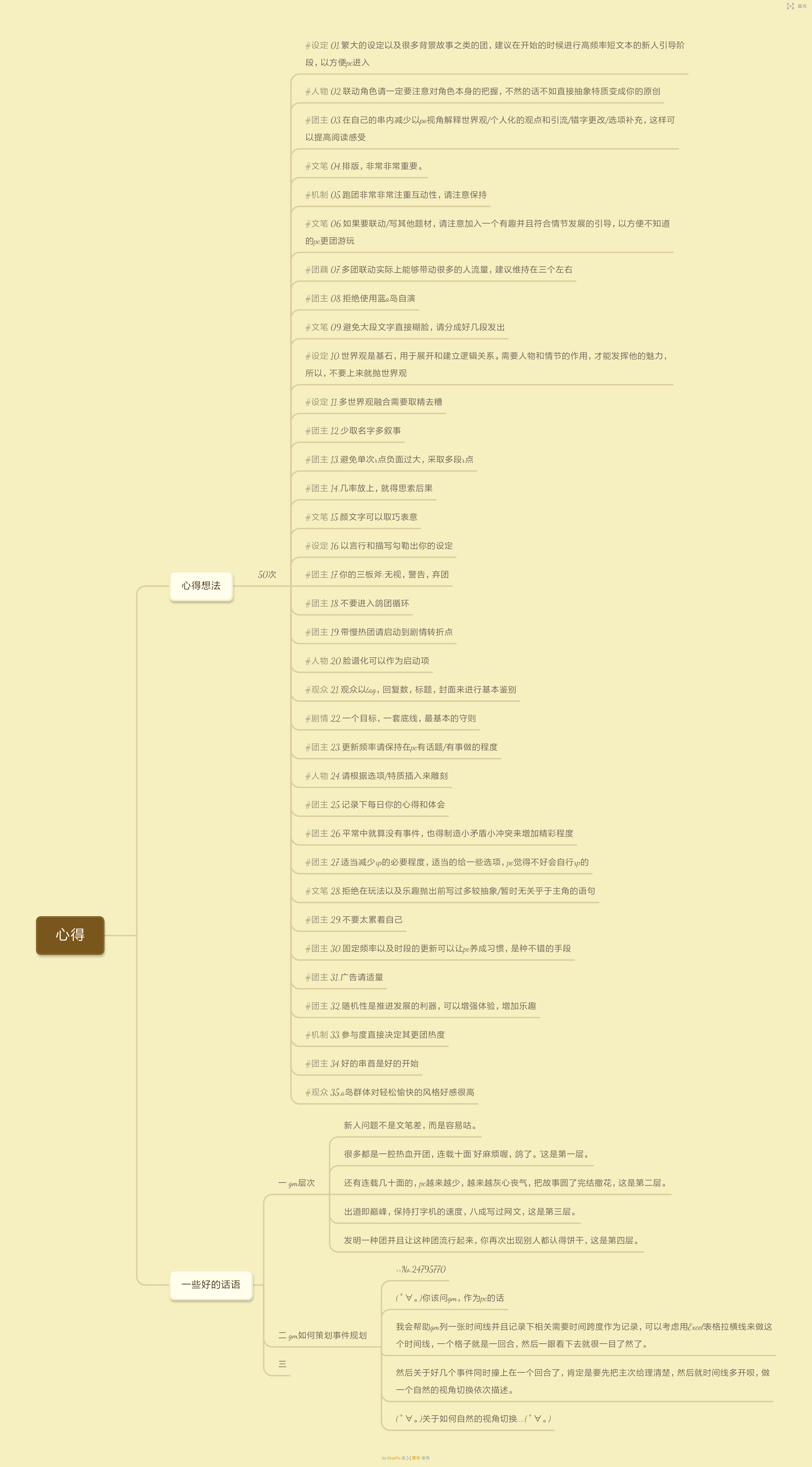
( ゚∀。)岛团新人求助处Ver2.0,欢迎各位来留言提问以及交流
附赠曾经的一张老版本的新团主入门技巧
无标题无名氏No.53118032
2022-11-01(二)01:28:56 ID: U2D49RX
摘抄于:https://adeptplay.com/seminar/situation-primary-and-primal
More precisely, for whoever has the job of saying what happens next (meaning "now"), what do they use to formulate what to say? What are their tools and raw materials for doing so? Specifically and most painfully:
更准确地说,对于那些要说出接下来(也就是现在)要发生什么的人,他们要用什么表述?他们有什么工具和原料?具体地说——最痛苦地说——他们应当:
Without being trapped in the past, i.e., any prepared presumption of what will happen during play
·不被过去所束缚,既,不被对团中将发生的事情做的任何提前准备束缚。
Without being trapped in the future, i.e., asking stupid questions like "what will be the most interesting" and developing something to play toward
·不被未来所束缚,既,不要问这种蠢问题:“什么会是最有趣的”——然后就为往那边发展做准备。
In practice, you (single or plural, whoever has this job) simply have to say what happens. But without falling into those familiar and oh-so-comfortable traps, how, how, how, how? For any "next now," at any scale, the situation is the key. One must reference how the situation has or is about to be affected. The answer might be "a lot," which is great. It might be "not much," which is still good and useful because your "next now" doesn't have to be drastic, i.e., it may remain confined to immediate concerns for the characters.
在实践中,你,或者你们,只要简单地描述发生的事情。不要落入那些熟悉而又舒适的陷阱——how?how?how?how?对于所有的“接下来”,都只要抓住最重要的“现状”。抓住那些已经发生和即将发生的事情,答案可能是“很多”,那很好;也可能是“不太多”,但也足够好、足够用了。因为“接下来”并不必须非常广大,既,它只需要继续保持对角色的直接关注。
无标题无名氏No.53150371
2022-11-02(三)14:01:23 ID: IKHGBPE
>>No.53149964
我们似乎从不去仔细探询打怪升级背后的原理是什么,而默认了它的合理性,是否导致了我们对于剧情设计上的一些问题( ゚ 3゚)
当我们想提升实力时,总是少不了一场恶战,这似乎已经成为了一个标配。或许有强化装备、修习功法等间接手段,但当我们深究起来,好像还是打怪爆金币、爆素材、爆功法的老一套,是否有一种完全不打怪,也不间接打怪的合理而有趣的升级方式呢( ゚∀。)
无标题无名氏No.53183916
2022-11-03(四)19:59:29 ID: U2D49RX
>>No.53150371
有,很多,实际上打怪升级才很少( ゚∀。)
这个问题我聊过一次,等我做完饭详谈吧。